Yu-Gi-Oh! TCG

Yu-Gi-Oh! card scanner: set code, rarity, edition, and price from one photo

Blue-Eyes White Dragon has been printed in dozens of sets and rarities since 2002. CardLens is a Yu-Gi-Oh! card scanner app for iPhone that reads the set code, the rarity foil, and the 1st Edition text from a photo, matches the exact print, and shows a value range built on recent eBay sales plus a condition grade.

  • LOB to the latest core set
  • 1st Edition and Unlimited
  • Secret, Ultimate, Ghost, Starlight
  • Quarter Century Secret Rares
Sample scanRecent eBay sales
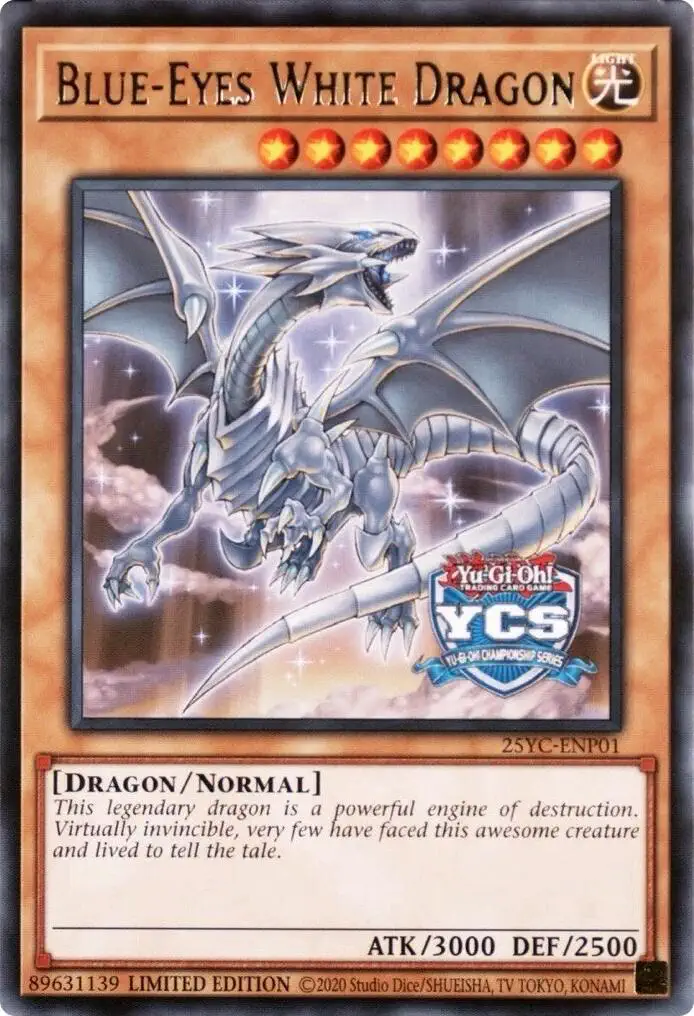
Blue-Eyes White Dragon Yu-Gi-Oh! card
Catalog match

Blue-Eyes White Dragon

YCS 2025 prize card · 25YC-ENP01 · Rare · Limited Edition

Value range
$120–190
Condition
Near Mint
Set code25YC-ENP01
EditionLimited
RarityRare

Sample result. Values move with the market; the app shows the current range when you scan.

What the foil is worth

Which print, what it sells for, what shape it is in

A Yu-Gi-Oh! card's name says almost nothing about its price. The set code, the rarity, and the edition do. CardLens reads those three from the card and prices the print you are holding, not the cheapest reprint of the name.

The exact print

Set code such as LOB-001, rarity, and edition. A 1st Edition Ultra Rare from the 2002 Legend of Blue Eyes release and an Unlimited common from a Starter Deck share a name and an eight-digit passcode; they do not share a price, and they do not share a catalog entry.
A value range with eBay evidence

The range comes from what copies with the same set code, rarity, and edition have been selling for on eBay, and the sales are one tap away. It is the check most duelists do by hand before a trade, done for you.

A condition grade

A raw estimate on the Near Mint to Damaged scale, and a read of the label on PSA, BGS, and CGC slabs. The Blue-Eyes above is a stamped Rare from the 2025 YCS prize pack given to players who made Day 2, and the set code is what tells it apart from the dozens of other prints.

How a Yu-Gi-Oh! card gets identified

Set codes, rarity foils, and editions: what the scanner reads and why it matters

Konami prints an identifier on every card, but the rarity is told by the foil rather than by text, and the edition is a small line of type. The scanner reads all three.

The set code and the passcode

Under the artwork on the right sits the set code: LOB-EN001 breaks into the set (Legend of Blue Eyes White Dragon), the language (EN), and the card's number in that set. The 2002 North American print read LOB-001 with no language; LOB-EN001 belongs to the 2004 worldwide reprint, and the two sell in different brackets. The eight-digit passcode in the bottom-left corner names the card rather than the print, so a reprint from a Mega Tin carries the same passcode as the original.

The scanner keys on the set code because it is the one line that separates a 2002 print from a 2024 reprint.

Rarity is a foil, not a label

Nothing on a Yu-Gi-Oh! card says Secret Rare. The rarity is in the foil: the diagonal shimmer of a Secret, the textured foil of an Ultimate, the pale full-card foil of a Ghost, the rainbow shine of a Starlight, and the 25th-anniversary foil of a Quarter Century Secret Rare. Konami often prints one slot in more than one rarity: Ultra and Ultimate in the mid-2000s, and Ultra or Secret with a Starlight or Quarter Century Secret Rare version today.

CardLens reads the foil from the photo and reports the rarity with the set code. If the light hides the foil, a second photo at a slight angle usually settles it.

1st Edition, Unlimited, and Limited Edition

The 1st Edition text sits under the left edge of the artwork on cards printed before 2014, and beside the passcode in the bottom-left corner on cards since. Unlimited prints have no edition text. Promos and prize cards say Limited Edition. For a card like Dark Magician from Legend of Blue Eyes, the gap between 1st Edition and Unlimited from the same set can be several times the price, so the edition is part of the match rather than a footnote.

The scanner treats each edition as its own print and prices it against sales of that edition.

OCG cards and Japanese prints

Cards from Japan and Asia belong to the OCG, a separate card pool with its own rarities, including 20th Secret Rare and Holographic Rare, and its own set codes. Asian-English OCG cards look like TCG cards and are not legal in TCG events. The catalog is built around the TCG, where the eBay evidence is deepest; scan an OCG card and the set code on screen tells you which pool you are in.

Konami's own Neuron app reads cards for deck registration. CardLens reads the same cards and answers the price question.

In the catalog

From Dark Duel Stories promos to Quarter Century foils

Three prints the scanner tells apart.

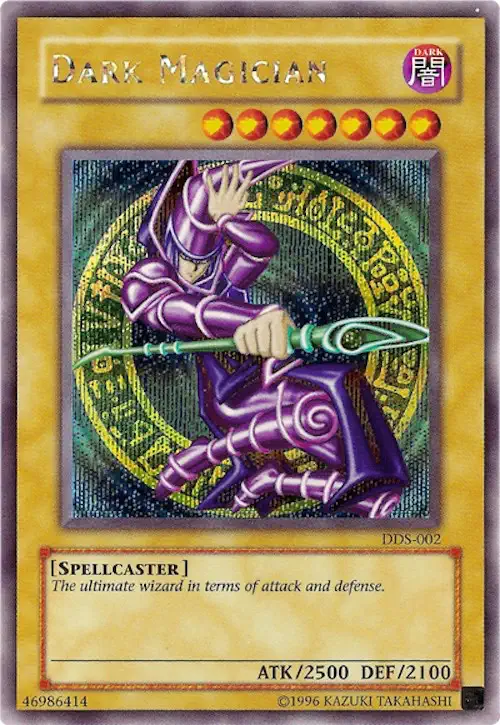
  • Dark MagicianDark MagicianDark Duel Stories promo · DDS-002 · Prismatic Secret
  • Blue-Eyes White DragonBlue-Eyes White DragonYCS 2025 prize card · 25YC-ENP01
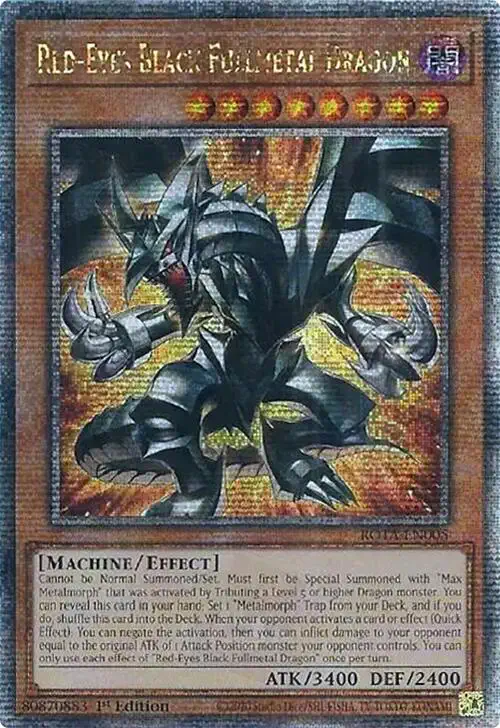
  • Red-Eyes Black DragonRed-Eyes Black DragonQuarter Century Bonanza · RA03-EN081

How it works

Scan a Yu-Gi-Oh! card in three steps

  1. Tip it until the foil shows

    Lay the card on the playmat under a lamp and tip it until the Secret or Ultimate shimmer shows, then shoot with the whole card in frame.

  2. Confirm set code and edition

    Compare the set code under the artwork and the edition text with the match on screen. If the rarity looks wrong, retake the shot with the foil catching the light.

  3. Read the range, save the card

    The value range and its eBay sales appear with the condition grade. Save the card to your vault and your collection total updates.

Before you trade at locals

Three habits of duelists who trade well

  • Let the foil catch the light

    For Secret, Ultimate, and Quarter Century Rares, angle the card so the foil pattern shows in the photo. The rarity is read from the foil, and a clear foil means the range belongs to the right rarity.

  • Confirm set code and edition text

    The set code and the edition line on screen should match the card. Once they do, the eBay sales behind the range are sales of that exact print.

  • Keep the binder in the vault

    Saved cards keep their print, grade, and value. When a card spikes after a banlist change, reopen it and the vault catches up with the new sales.

Questions

Yu-Gi-Oh! card scanner questions, answered

Is there a Yu-Gi-Oh! card scanner app that shows prices?

CardLens scans a Yu-Gi-Oh! card from a photo on iPhone, matches the set code, rarity, and edition, and shows a value range built on recent eBay sales. Konami's Neuron app scans cards for deck registration and does not price them.

Is there a Yu-Gi-Oh! card price checker app?

Scan the card and CardLens shows a value range built on recent eBay sales of the same set code, rarity, and edition, with the sales listed. It works as a price checker for any TCG print from Legend of Blue Eyes to the current core set.

How do I know if my Yu-Gi-Oh! card is valuable?

Check three things: the set code under the artwork, the rarity foil, and whether it carries 1st Edition text. A scan reads all three and shows what copies with the same set code and edition have sold for.

Can I look up a card by its set code?

The scan reads the set code for you and shows it with the match, so you can confirm it against the card. The catalog also lets you browse and search by game inside the app.

Does the scanner tell 1st Edition from Unlimited?

The edition text is part of the match, and each edition is priced against sales of that edition.

Does it work with OCG or Japanese Yu-Gi-Oh! cards?

The catalog is built around the TCG, and that is where the eBay evidence is deepest. Scan an OCG card and you will get a match where the catalog has it; the set code on screen tells you which pool you are in.

Free on the App Store

Scan your first Yu-Gi-Oh! card.

Free on the App Store. Legend of Blue Eyes to the current core set, with the rarity foil and the edition in every match.

Download CardLens