Find the exact printing
Read the collector number and set symbol at the bottom of the card. That pair names one printing. Base Set has no symbol at all, which is itself the tell.
 CardLens
Card scanners
Card values
Tools
Language
Pokémon card value
Every Pokémon card's value comes down to which printing it is, how rare the finish is, which edition it came from, what condition it is in, and whether it is graded. This page explains how to read each one off the card. CardLens reads them from a photo and shows what copies like yours have been selling for on eBay.
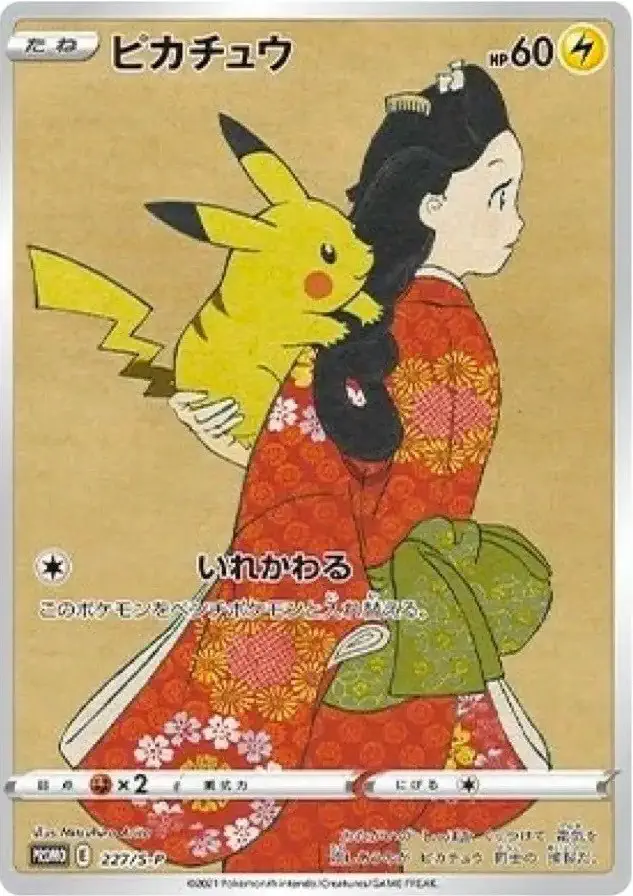
Pikachu
Pokémon Stamp Box promo · 227/S-P · Japanese
Sample result. Values move with the market; the app shows the current range when you scan.
The short answer
There is no fixed price for a Pokémon card, only what copies like it have sold for lately. A Charizard from Base Set and a Charizard from Celebrations share a name and almost nothing else. The steps below get you to the right card and the right sales.
Read the collector number and set symbol at the bottom of the card. That pair names one printing. Base Set has no symbol at all, which is itself the tell.
Circle, diamond, or star for rarity; holo, reverse holo, or non-holo for finish; a 1st Edition stamp or shadowless frame on vintage cards. Each one changes the price, sometimes by a lot.
Near Mint and Lightly Played copies can differ by half the price. Graded copies are a separate market. Compare your card with completed sales of the same printing and condition, not with asking prices.
The five things
You can do all of this by eye with the card in hand. A scan does the first four for you and shows the sales.
Look at the bottom of the card. A modern card shows a collector number like 100/101 and a small set symbol; cards since Sword & Shield add a regulation mark letter, and Scarlet & Violet added a three-letter set code. That number and symbol name one printing, and it is the printing that has a price, not the character. A Pikachu can be worth a few cents or a few thousand dollars depending on which one it is.
Vintage cards from Base Set carry no set symbol. Jungle, Fossil, and every later set do. No symbol and no black promo star means Base Set, and the next questions matter more than usual.
The small shape near the number is the printed rarity: circle common, diamond uncommon, star rare, with extra star marks for the modern Double Rare, Ultra Rare, Illustration Rare, Special Illustration Rare, and Hyper Rare tiers. Then look at the foil. A holo has the shine on the artwork only; a reverse holo has it on everything except the artwork; a non-holo has none.
In older sets a reverse holo of a rare can be worth several times the non-holo, and in modern sets the Illustration Rares and Special Illustration Rares are where most of a set's value sits.
On the earliest print run of a Wizards-era set, a 1st Edition stamp sits at the lower-left corner of the artwork. Base Set also has shadowless cards, which lack the drop shadow on the right edge of the art frame, and a final print with a 1999-2000 copyright line. Each of those is a different card with a different price, and the gap between a 1st Edition and an unlimited Charizard is the largest in the hobby.
Promos carry a black star in place of a rarity symbol. Japanese cards use their own numbering and sell in their own market, usually at different prices from the English print. The Pikachu above, from a 2021 Japan Post stamp set, was never printed in English at all.
Raw cards are priced on a scale from Near Mint through Lightly Played, Moderately Played, and Heavily Played to Damaged. The step from Near Mint to Lightly Played is usually the expensive one. Check the corners for whitening, the edges for nicks, the surface for scratches under a lamp, and the back, which wears before the front.
CardLens estimates the condition from a photo of the front. The back is yours to check.
A card in a PSA, BGS, or CGC slab is priced by its grade, and a PSA 10 of a popular vintage holo can sell for many times a raw Near Mint copy. That premium is what makes grading worth the fee on some cards and pointless on most modern ones. If your card is already slabbed, the label is the fact that matters, and CardLens reads it.
If it is raw, look at how raw and graded copies of the same printing have been selling before deciding whether to send it in.
Bulk is bulk: commons, uncommons, and most non-holo rares from any era sell by the pound. The first tier that moves is reverse holos of popular Pokémon and modern Illustration Rares, a few dollars to a few tens. Above that sit vintage holos in clean condition, Special Illustration Rares, and Japanese promos, from tens into hundreds. At the top are 1st Edition and shadowless Base Set holos, Gold Star cards, early Japanese promos, and trophy cards, where a raw copy runs four figures and a PSA 10 goes far beyond.
A scan tells you in a few seconds which tier your card belongs to, and shows the sales that put it there.
Check by photo
Plain background, even light, the whole card in frame. CardLens reads the set, number, rarity, finish, and language.
Check the number on screen against the number on the card. If it is a vintage card, check the edition and shadowless details in the match.
See a value range built on recent eBay sales of that printing, with the sales listed, plus a condition grade. Save the card to your collection if you want to keep tracking it.
Before you sell
Match the collector number and set symbol first. A value range for the exact printing, backed by eBay sales of that printing, is the number a buyer will respect.
Listings show what sellers hope for. Completed sales show what buyers paid. CardLens shows the sales behind every range, so you are pricing against real money.
Look at raw and graded sales for the same printing. When the graded price clears the fee with room to spare, send it in. Otherwise a Near Mint raw copy sells fine.
Questions
Identify the exact printing from the collector number and set symbol, note the rarity, finish, and edition, judge the condition, then look at recent sold prices for that printing in that condition. CardLens does the identification from a photo and shows the eBay sales.
CardLens is a Pokémon card value scanner for iPhone. Photograph the card and it identifies the exact printing, then shows a value range built on recent eBay sales of that printing, with the sales listed, and a condition grade. Use it as a price checker before you buy, sell, or trade.
Most common and uncommon cards from any era are worth very little. Holos, reverse holos of rares, Illustration Rares, vintage 1st Edition and shadowless cards, and promos are the ones to check. A scan tells you in a few seconds which category your card falls into.
Completed sales on eBay are the most direct source, filtered to the exact printing and condition. CardLens is free to download and shows those sales next to the match after a scan, which saves the searching.
Scan each card into the CardLens vault and the vault total adds up every card's value range, refreshed from recent eBay sales when you reopen a card. A binder page goes by in a couple of minutes, so a whole binder is an evening.
Sometimes more and sometimes less. Japanese cards have their own numbering and their own market. Vintage Japanese promos can be worth more than the English equivalent; many modern Japanese cards sell for less because print runs are larger. Compare sales of the actual language.
Only if the gap between raw sales and graded sales of the same printing covers the grading fee, shipping, and the risk of a lower grade. That is usually true for vintage holos and popular alternate arts in Near Mint condition, and rarely true for modern cards under a modest price.
Free on the App Store
Free on the App Store. Set, number, finish, and edition read off the card, with the eBay sales that price it and a condition grade beside them.